
Waterproof Ski Jacket Buying Guide
A waterproof ski jacket keeps snow, sleet and rain out from the first lift to the last run. Choosing one comes down to four checks. These are the waterproof rating, the sealing of seams and zips, the breathability of the fabric and the fit. This guide explains each check in plain terms, so you can compare men's, women's and children's waterproof skiing jackets with confidence.
Why Waterproofing Matters on Snow
Snow behaves differently from rain. It melts on contact with body heat and packs into cuffs and seams during a fall. It also soaks into fabric pressed against a chairlift seat for hours. A ski jacket faces moisture all day, not just during a storm.
Resort weather adds to the load. A morning of dry powder can turn into wet slush by lunchtime, and a mild afternoon at valley level can bring rain. Damp layers lose their ability to hold heat, so a waterproof ski jacket protects your body temperature as well as keeping you dry. Waterproofing also blocks wind, which makes cold air feel sharper on exposed chairlifts.
Skiers and snowboarders put particular strain on a jacket. Falls, kneeling to fasten bindings and sitting in the snow all push wet snow against the fabric. A jacket that copes with a light shower on a walk can still let moisture through after a full day on the slopes.
Waterproof Ratings Explained
A waterproof rating shows how much water pressure a fabric can hold back before it leaks. The measurement is called hydrostatic head, and it is given in millimetres. A fabric rated at 10,000mm can hold back a column of water ten metres tall. A higher number means stronger protection against wet snow and rain.
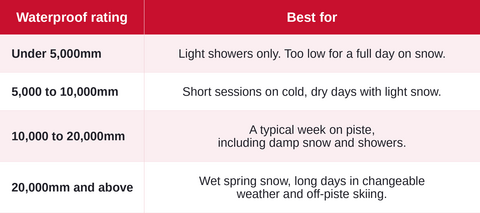
Under 5,000mm suits light showers only and is too low for a full day on snow. A rating of 5,000 to 10,000mm suits short sessions on cold, dry days with light snow. A rating of 10,000 to 20,000mm covers a typical week on piste, including damp snow and showers. A rating of 20,000mm and above suits wet spring snow, long days in changeable weather and off-piste skiing.
Choose the higher end of your band if you fall often, spend long periods sitting on the snow or ski in a wet climate. Snowboarders and beginners spend more time in contact with the snow, so extra margin keeps them drier.
Brands list ratings in different places, so check the product page. Some jackets give one figure for the whole garment, and others give separate figures for the body, hood and sleeves. Our guide to waterproof ratings and breathability covers the numbers in more depth.
Waterproof, Water-Resistant and Showerproof
Labels vary, so the wording matters. A waterproof jacket pairs a rated membrane or coating with taped seams. A water-resistant jacket relies on a surface finish and sometimes a light coating. It handles brief, light snow but not a day of wet weather. Showerproof describes the lowest level of protection and suits short walks, not ski days. If a product page lists no waterproof rating or seam detail, treat the jacket as water-resistant and keep looking.

Breathability: Staying Dry From the Inside
A waterproof ski jacket also has to let sweat escape. Skiing is physical, and a jacket that traps moisture leaves you damp and cold on the next lift ride. Breathability measures how many grams of water vapour pass through one square metre of fabric in 24 hours, written as g/m²/24hr.
A rating of 10,000g/m² or more suits most resort skiers. A rating of 15,000g/m² or more helps if you ski hard, tour uphill or tend to run warm. Higher figures let sweat leave faster.
Waterproofing and breathability work as a pair. A highly waterproof jacket with low breathability feels clammy once you start working, and a highly breathable jacket with low waterproofing lets weather in. Underarm vents add airflow without lowering protection, because the zips close fully when conditions turn wet.
What Keeps a Ski Jacket Waterproof
A rating describes the fabric on its own. The parts below decide how the whole jacket performs in snow:
A membrane is a thin layer with microscopic pores. The pores are too small for water droplets to pass but large enough for sweat vapour to escape. GORE-TEX is the best-known membrane, and many brands make their own. A coating is a polyurethane layer applied to the fabric. Coatings usually cost less and tend to breathe less well than membranes.
Needle holes along a seam let water through, so tape is heat-sealed over the stitching from the inside. Fully taped means every seam is sealed. Critically taped means only the most exposed seams, such as the shoulders and hood, are sealed.
A coated front zip resists water at the main opening. A fabric storm flap over the zip adds a second barrier.
DWR stands for durable water repellent. This surface treatment makes water bead and roll off the outer fabric instead of soaking in. A dry outer fabric also helps the membrane breathe.
Adjustable cuffs, a snug hood and a hem drawcord close the gaps where snow tries to get in. Wrist gaiters and a powder skirt stop snow riding up the sleeves and back in a fall.

Waterproofing by Snowsport
The right level of waterproofing depends on how you spend your day on the mountain.
A rating of 10,000mm or more covers most resort weeks. Fully taped seams and a hood that fits over a helmet matter as much as a very high rating on groomed runs in settled weather.
Snowboarders sit, kneel and fall more often than skiers, so the seat, hips and sleeves take the most wet snow. Look for a rating in the upper half of the 10,000 to 20,000mm band and a jacket with a powder skirt.
Park days mean long waits and plenty of falls on hard, wet snow. A rating of 10,000mm or above, a loose fit and room for extra layers work well.
Deep snow, changeable weather and hard effort call for 20,000mm or more, fully taped seams and vents that open wide.
Beginners and children spend more time sitting and falling in the snow, so a higher rating and fully taped seams give a drier first week.
Resort Conditions and Waterproofing
Where you ski changes how much waterproofing you need. Scottish resorts often see wet, windy and mild weather, where rain and sleet are as common as snow. A rating of 15,000mm or more with fully taped seams suits those conditions.
Alpine resorts vary with altitude and time of year. High, cold slopes in midwinter are often dry, while low resorts and spring trips bring wet snow and slush. A rating of 10,000 to 20,000mm covers most Alpine weeks. Regions known for deep, dry powder, such as the Rockies and Japan, call for strong breathability. Hard effort in cold snow produces sweat that needs to escape.
Men's, Women's and Children's Waterproof Ski Jackets
Waterproofing works the same way across all three, so the main difference is fit. Leave room for a base layer and a mid-layer underneath, and check the size guide before ordering.
Men's waterproof ski jackets have a straighter cut with longer sleeves and body length. Check that the hem sits low enough to cover your lower back when you bend forward.
Women's waterproof ski jackets follow the waist and hips, with shorter sleeves and body length. A cut that fits the hips keeps the powder skirt in place and limits gaps where snow can enter. Test the sleeve length with your arms raised, as if holding ski poles.
Children's waterproof ski jackets face more sitting, falling and snow play than adult jackets, so waterproofing matters even more. Look for a rating in the upper band, fully taped seams and cuffs that fit over gloves. Some children's jackets include sleeve and hem adjusters that extend the fit as a child grows. Sizing runs by age or height, so leave room for layers without letting the sleeves cover the hands.
Pairing a Waterproof Ski Jacket With Trousers and Layers
A waterproof ski jacket works best as part of a matching system. Ski pants take the same wet snow as the jacket, so a mismatch leaves a weak point at the waist. Choose trousers with a similar waterproof rating, and check that the powder skirt overlaps or clips to the waistband.
Underneath, a moisture-wicking base layer sits against the skin and a fleece or insulated mid-layer adds heat. Adding or removing the mid-layer lets you adjust to changing conditions without changing the jacket.
Checking a Waterproof Ski Jacket Before You Buy
Use this checklist to compare jackets:
- A waterproof rating of at least 10,000mm for resort skiing, and 20,000mm or more for off-piste or wet conditions
- A breathability rating of 10,000g/m² or higher
- Fully taped seams
- Coated zips and storm flaps
- A hood that fits over a helmet
- Wrist gaiters and a powder skirt
- Vents for releasing heat
- A fit that leaves room for a base layer and mid-layer
Where Water Gets In
Most leaks start at the edges of a jacket, not in the middle of the fabric. Rucksack straps wear the shoulders, so a ski daypack can rub away the finish there first. A hood that does not adjust snugly leaves a gap around a helmet. Cuffs that stop short of the glove let moisture run up the sleeve. A hem that rides up lets snow in at the back when you sit down. Check each area when you try a jacket on, and move around as you would on the slope.

Waterproofing a Skiing Jacket Again
Dirt, sweat and wear gradually reduce the DWR finish on the outer fabric. Water that stops beading and soaks into the fabric is the clearest sign. This is called wetting out. The membrane underneath still works, but a wet outer fabric breathes poorly and feels cold. Reproofing restores the finish.
- Close the zips and fastenings, then empty the pockets.
- Wash the jacket with a technical cleaner such as Nikwax Tech Wash, following the label. Standard detergent and fabric softener leave residue that blocks the membrane.
- Rinse thoroughly so no cleaner remains in the fabric.
- Dry the jacket as the care label directs. A gentle tumble dry can help revive the DWR on some jackets.
- Apply a wash-in or spray-on proofer to the clean jacket, following the product instructions.
- Test the result by sprinkling water on the fabric. Beading means the finish is working.
Reproofing treats the outer finish only. Leaking seams, tears or a worn membrane need repair tape, seam sealer or a replacement jacket. Store the jacket dry and loosely hung, and reproof before each season for the best results.
Choosing the Right Waterproof Ski Jacket
A waterproof ski jacket needs three things: a waterproof rating that matches your conditions, taped seams with sealed openings, and breathable fabric. Most resort skiers do well with 10,000mm or more, while wet spring snow and off-piste days call for 20,000mm or more. Men's, women's and children's waterproof ski jackets share the same technology, so fit makes the final decision. Regular washing and reproofing keeps the outer fabric shedding water season after season.
Need help choosing between hardshell and insulated styles, or deciding on fit and features? Our ski jacket buying guide covers those topics in full. Browse waterproof ski jackets for men, women and children at Snow+Rock.
Waterproof Jacket FAQs
Most ski jackets are waterproof, but the level of protection varies. A waterproof ski jacket combines a membrane or coating, taped seams and a stated rating. A water-resistant jacket relies on a surface finish and copes with light snow or brief showers. Check the rating and seam details on the product page.
Yes. Snow melts on contact with body heat, and a jacket without waterproofing soon lets moisture through to your layers. The same applies to snowboarding. Even a cold, dry morning can turn wet by afternoon, and waterproofing also blocks wind.
A rating of 10,000mm suits a typical week on piste. Choose 15,000mm to 20,000mm or more for wet spring snow, long days in changeable weather or off-piste skiing. Ratings of 5,000mm to 10,000mm suit short sessions on cold, dry days. Pair the rating with taped seams, since seams are a common weak point.
Wash the jacket with a technical cleaner, rinse it well and dry it as the care label directs. Then apply a wash-in or spray-on DWR proofer. Water soaking into the outer fabric, called wetting out, usually means the DWR has worn off. If water still soaks through after treatment, the seams or membrane may be damaged.
Waterproofing works the same way in all three, so the difference is fit. Men's jackets have a straighter cut with longer sleeves and body. Women's jackets follow the waist and hips. Children's jackets are sized by age or height and may include adjusters to extend the fit as a child grows.
No. GORE-TEX is the best-known waterproof membrane, but many brands use their own membranes and coatings with good results. Compare the waterproof rating, breathability rating and seam taping rather than the membrane name alone.
Related Articles


Let us know you agree to cookies
We use marketing, analytical and functional cookies as well as similar technologies to give you the best experience. Third parties, including social media platforms, often place tracking cookies on our site to show you personalised adverts outside of our website.
We store your cookie preferences for two years and you can edit your preferences via ‘manage cookies’ or through the cookie policy at the bottom of every page. For more information, please see our cookie policy.