
Insulated Jacket Guide
An insulated jacket traps the heat your body produces and holds it in tiny pockets of air. In the mountains, the jacket usually sits under a waterproof shell as a mid-layer. In dry, cold conditions, it can also work as your outer layer.
How Insulated Jackets Work in a Layering System
Winter mountain days push insulation hard. You generate heat climbing a skin track or skiing a long run, then cool down fast on a chairlift or on a summit in freezing wind. The right insulated jacket handles both extremes. Down, synthetic and hybrid insulation each manage this in a different way, so the best choice depends on how you spend your time on snow.
Mountain clothing works as a system of three layers. A base layer sits against your skin and moves sweat away from your body. A mid-layer holds heat. A waterproof shell blocks wind, snow and rain.
An insulated jacket is the heat-holding part of that system. It does not need to be waterproof, because the shell protects it. Most skiers and snowboarders therefore choose a jacket for its heat, weight and packed size rather than its weather protection.
Insulation does not create heat. Your body creates it, and the insulation slows the rate at which that heat escapes. A thicker or higher quality fill holds more air, so the jacket feels warmer. A jacket that fits well keeps that trapped air close to your body without squashing it flat.
Down Insulation for Cold, Dry Conditions
Down comes from the small, soft feathers found closest to the skin of geese and ducks. Goose down generally gives more heat for its weight than duck down and compresses smaller. That makes goose down the premium choice for light, packable jackets.
The heat a down jacket gives is called its loft. Loft describes how much the down expands and how much air it traps. Fill power measures that loft, and a higher number means the down traps more air per gram. A jacket with a high fill power is warmer for its weight and packs down smaller.
Key advantages of down:
- Outstanding heat for very little weight, especially with goose down
- Compresses small enough to fit in a rucksack lid or jacket pocket
- Fill power rating shows heat and packability at a glance
- Lasts for many seasons with the right care
Things to Consider:
- Wet down clumps together and stops trapping heat
- Sweat and melting snow can soak a down jacket on a long, active day
- Hydrophobic (water-resistant) coatings and DWR (durable water-repellent) finishes cope with light snow but not with sustained moisture
- Drying a soaked down jacket in the mountains is slow and difficult
Down suits cold, dry days when weight and packed size matter most. Good uses include chairlift layers, lunch stops, apres-ski, summit stops and cold, dry ski touring days. Worn under a waterproof shell, a down jacket stays protected from snow and spray.
Understanding Fill Power Ratings
Fill power appears on most down jacket labels as a number, such as 600, 700 or 800. The number describes the volume, in cubic inches, that one ounce of down fills under test conditions. A bigger number means bigger, lighter clusters of down that trap more air.
As a general guide:
- 500 to 650: Good quality down that suits resort skiing and everyday cold weather
- 650 to 750: A balance of heat, weight and packed size for most skiers and snowboarders
- 800 and above: The lightest and most packable option, popular with ski tourers and alpinists
Fill power does not tell you the total amount of down inside the jacket. A jacket with a lower fill power but more down can be warmer than a jacket with a higher fill power and less down. Check the fill weight (the total grams of down) if the product page lists it.

Synthetic Insulation for Active and Damp Days
Synthetic insulation uses man-made polyester fibres that copy the structure of natural down. These fibres trap warm air in the same way as down but keep their insulating power when damp. Synthetic fill also dries quickly and usually costs less than down.
Synthetic warmth is measured in grams per square metre (g/m2). This figure describes the density of the insulation layer, not the weight of the whole jacket. A higher number means more insulation in each part of the jacket.
- 50g to 100g: Suits spring skiing, mild days and high-effort use as a technical mid-layer
- 100g to 200g: Suits cold conditions, slow days and long periods standing still
Key advantages of synthetic insulation:
- Keeps insulating when wet, which helps in snow, sleet and heavy sweating
- Dries fast and is simple to look after
- Hypoallergenic, so suitable for anyone allergic to natural down
- Often more affordable than down
Things to Consider:
- Heavier and bulkier than down for the same heat
- Packs larger in a rucksack
- Does not usually match the heat of high-quality down at the same weight
Synthetic jackets suit snowboarders who spend time sitting in snow, skiers who work hard on moguls or in the trees, and climbers who sweat on the approach. Anyone expecting a damp or unpredictable day will benefit from a synthetic layer that keeps working when conditions turn.
Hybrid Insulation for Touring and Changeable Weather
Hybrid jackets combine both materials. Synthetic fill sits in the shoulders and arms, while down fills the core of the body.
This layout solves two problems. Rucksack straps squash the shoulders, and synthetic insulation keeps its loft under compression. Sweat, snow and spindrift soak the arms and shoulders first, and synthetic fill keeps working when damp. Down in the main body keeps the jacket light and packable where most of your heat is needed.
Hybrids suit ski touring, ski mountaineering and alpine days where conditions change quickly. They usually cost more than pure down or synthetic jackets and come in fewer styles. For athletes who carry a pack and move between effort and rest, the extra cost often pays off.
Baffles: How Insulation Stays in Place
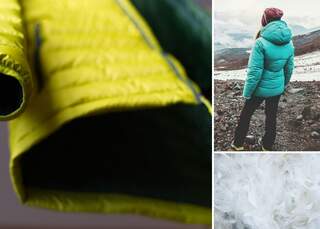
Baffles are the sections that hold insulation in position. They stop the fill from slumping to the hem and spread heat evenly across the jacket. The way a baffle is built changes how well a jacket performs.
- Stitch-through baffles: Keep insulation evenly spread, but heat can escape through the stitched seams
- Box wall baffles: Let insulation expand to full loft, with stitching built to reduce heat loss
Baffle width also changes how a jacket behaves, especially under a shell:
- Wide baffles: The warmest option, with more down in each section and fewer seams for heat to escape. These jackets feel bulky, layer less easily under a ski shell and pack larger.
- Narrow or micro baffles: Slimmer and easier to layer under a waterproof jacket in cold, wet weather. These jackets pack small enough to stash in a rucksack until you stop moving.
Skiers and snowboarders who layer under a close-fitting shell usually prefer narrow baffles. Anyone who needs maximum heat on cold, still days, such as on a winter camping trip, will gain more from wide baffles.
Hoods: Helmet Fit and Extra Heat
An insulated hood adds heat around the head and neck. This helps in very cold, low-activity situations such as long lift queues, race spectating, apres-ski or Northern Lights trips.
A hood also adds bulk and weight. Under a ski shell and helmet, a thick insulated hood can bunch up and sit awkwardly. Many skiers and snowboarders who wear the jacket as a mid-layer choose a hoodless style for a cleaner fit.
Some hooded jackets are cut to fit over a helmet, which suits climbers and mountaineers who wear an insulated layer over their shell at stops. Anyone wearing the jacket as a standalone outer layer in the village or on a cold-weather trip will usually get more from a hood.
Matching Insulation to Your Activity
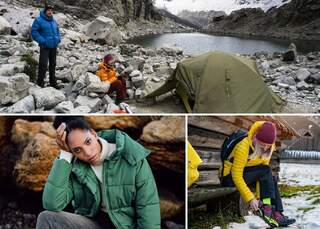
Activity level matters as much as temperature. A jacket that suits a still, cold belay can overheat you on a skin track. Consider how much you move and how much you sweat before you choose.
Down or lightweight synthetic mid-layer
Synthetic, because falls and sitting in snow bring moisture
Synthetic at 50g to 100g
Hybrid, or a packable down jacket to wear at stops and on descents
Light synthetic mid-layer for the descent, with a packable down jacket in the bag
High fill power down for belays and summit stops, or hybrid for changeable weather
Synthetic, because spindrift and meltwater soak insulation quickly
Hooded down jacket with wide baffles
Active Insulation vs Static Insulation
Insulated jackets fall into two broad groups. Static insulation is built for standing still and gives the most heat for the weight. Active insulation is built for moving, and uses lighter, more breathable fill so you can keep it on while you work hard.
Down jackets are typically static pieces. You put them on when you stop and take them off when you start moving. Lightweight synthetic jackets often work as active pieces, because they release moisture better and cope with sweat. Many ski tourers carry one of each and swap between them through the day.
Breathability matters because sweat that cannot escape cools you down as soon as you stop. A jacket that traps moisture will feel warm for the first few minutes and cold after that.

Fit, Features and Details Worth Checking
A good fit keeps heat in and lets you move. A jacket that is too tight squashes the insulation and reduces its loft. A jacket that is too loose lets warm air escape and cold air in.
Check these details before you buy:
Cuffs should cover your wrists when you reach forward, and sit under your gloves
Elasticated or adjustable hems and cuffs hold heat in and block draughts
Handwarmer pockets suit lift queues, and a zipped chest pocket holds a pass or phone
A two-way zip makes it easier to sit down, ventilate or wear a harness
The jacket should fit over a base layer and under your shell without pulling across the shoulders
Looking After Your Insulated Jacket
Regular care keeps insulation lifting properly. Dirt, sweat and body oils flatten both down and synthetic fill over time, which reduces heat.
Use a cleaner made for down or technical fabrics, and follow the care label
Tumble dry on a low heat with clean tennis balls or dryer balls to break up clumps
Hang to dry or tumble dry on a low heat if the label allows
Keep the jacket loosely hung or in a large breathable bag, not compressed in a stuff sack
Store a jacket uncompressed between trips. Long-term compression can reduce the loft of both down and synthetic fill.

Responsible Down and Ethical Sourcing
Many brands now use down certified to a responsible sourcing standard. The Responsible Down Standard (RDS) is one common certification, and it covers the welfare of the birds the down comes from. Look for the logo on the product page or label if sourcing matters to you.
All You Need To Keep Warm On The Slopes
Still not sure which jacket is right for you? Visit us in-store for advice from our experts.
FAQs
Down gives the most heat for the least weight, so it suits cold, dry days and ski touring. Synthetic insulation keeps working when wet, so it suits snowboarding, high-effort skiing and damp conditions.
Yes, a thin down jacket works well as a mid-layer under a waterproof ski shell. The shell keeps snow and moisture away from the down.
Fill power of 600 to 700 suits most resort skiers. Ratings of 800 and above give more heat per gram and pack smaller, which helps ski tourers and alpinists.
Synthetic insulation of 50g to 100g suits mild days and active mid-layer use. Insulation of 100g to 200g suits colder conditions and slower days.
A hooded jacket suits cold, low-activity moments such as lift queues and apres-ski. A hoodless jacket usually fits better under a ski shell and helmet.
Related Articles


Let us know you agree to cookies
We use marketing, analytical and functional cookies as well as similar technologies to give you the best experience. Third parties, including social media platforms, often place tracking cookies on our site to show you personalised adverts outside of our website.
We store your cookie preferences for two years and you can edit your preferences via ‘manage cookies’ or through the cookie policy at the bottom of every page. For more information, please see our cookie policy.