
Choosing ski poles comes down to four quick questions: what kind of skiing you do, what length suits your height, what the pole is made from, and whether you need it fixed or adjustable.
What Type of Pole Suits Your Skiing?
Alpine poles cover general piste and off-piste skiing, straight-shafted with a mid-size basket, the standard choice for general resort days.
Powder poles use a larger basket that stops the pole sinking through soft, deep snow, worth having if you spend real time off-piste rather than on groomed runs.
Racing poles curve around the body and use a smaller basket, built for aerodynamics and speed rather than all-round use, and generally not worth the trade-off unless you're actually racing.
Nordic poles run longer and lighter, built for the forward push of cross-country skiing rather than downhill turns, and aren't interchangeable with alpine poles despite looking similar at a glance.

What Material Suits How You Ski?
- Aluminium is the standard choice: durable, affordable, and flexible enough to bend rather than snap on a hard knock. It suits a broad range of skiers well, beginners especially, since a dented aluminium pole still works, whereas a cracked carbon one doesn't.
- Carbon fibre is lighter and stiffer, transferring more energy into each pole plant, which matters at speed or over a long day when arm fatigue adds up. The trade-off is impact resistance: carbon can snap under a hard hit that an aluminium pole would simply bend through.
- Composite poles blend materials, aiming for some of carbon's lightness alongside better shock absorption than pure carbon offers, usually at a higher price than aluminium alone.
What Length Do You Need?
The standard fitting check: stand upright, hold the pole upside down, grip it just under the basket, and let the tip rest on the floor. Your elbow should form a right angle. Too long pulls your arm up and back on every plant; too short forces you to hunch forward.
Poles are typically sold in fixed lengths across a range, commonly from around 100cm to 135cm depending on the model, so check the specific size options on the pole you're looking at rather than assuming one length fits every model the same way.

Fixed Length or Adjustable
Fixed-length poles are simpler, lighter, and generally cheaper- the right choice once you know your correct length and don't need to change it mid-run.
Adjustable and collapsible poles extend or fold down, useful for backcountry and ski touring specifically, where a shorter pole helps on the climb and a longer one helps on the descent, and a folded pole packs into a bag rather than staying an awkward length the whole trip. They cost more and add some weight at the adjustment mechanism, a fair trade for anyone actually touring rather than sticking to resort runs.
What Grip, Strap and Basket Suit You?
Grips come in plastic, rubber or cork. Plastic is the cheapest and least grippy when wet. Rubber holds on better in damp gloves. Cork moulds to your hand's shape over time and manages sweat and moisture well, generally the preferred choice for anyone skiing regularly enough to notice the difference.
Straps should sit snugly around your wrist without needing a white-knuckle grip on the pole itself, since a good strap takes some of the load rather than leaving your hand to do all the holding.
Baskets determine how much a pole sinks into snow. Smaller baskets suit groomed runs and firmer snow. Larger baskets stop the pole disappearing into powder, worth prioritising if off-piste days are a regular part of your skiing rather than an occasional one.
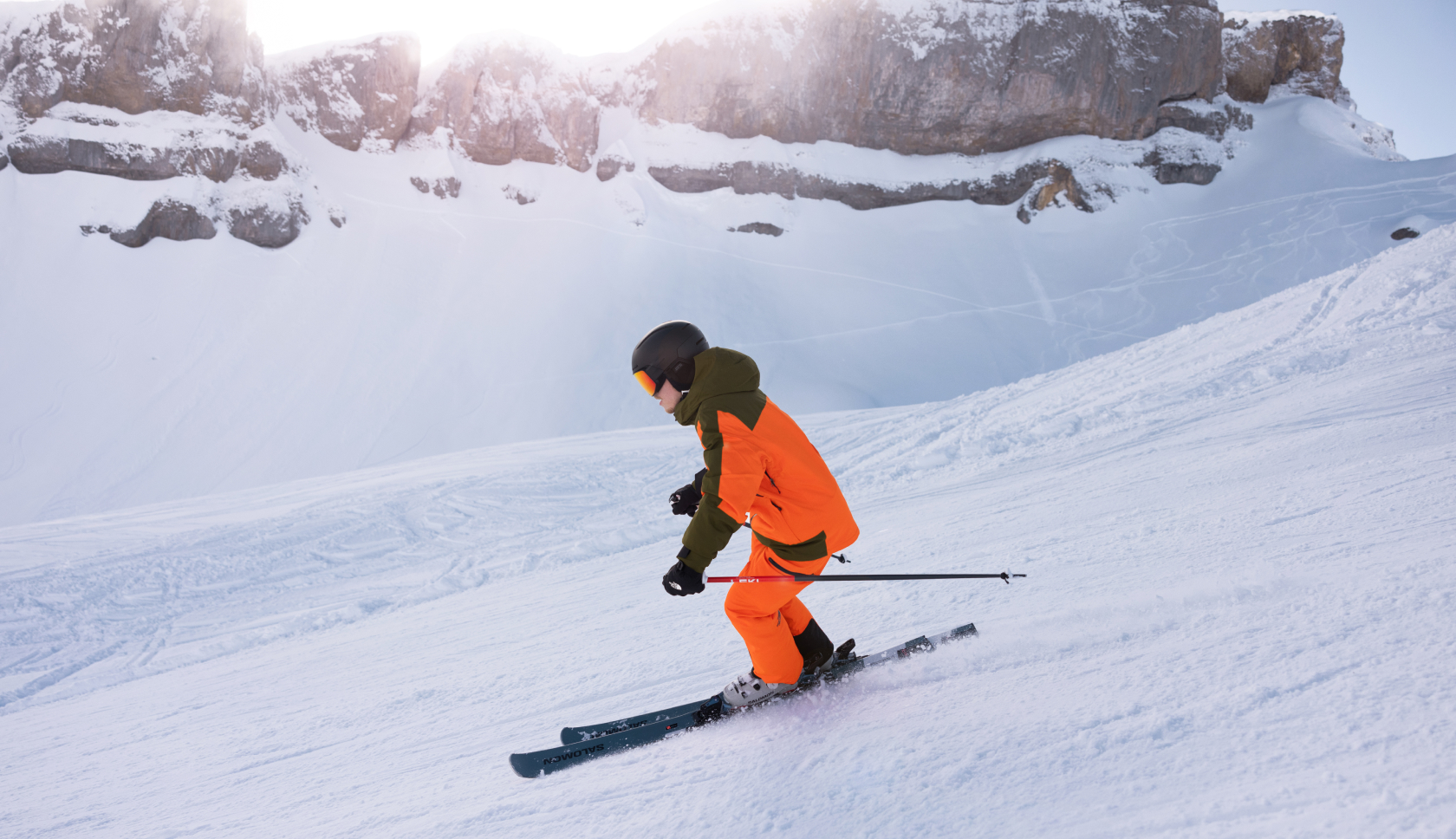
Match pole type to your terrain, length to your height using the elbow test, and fixed or adjustable to whether you're touring or sticking to resort runs. Material and grip are worth fine-tuning once those three are settled.
Browse the full range of ski poles at Snow+Rock, including Leki, Salomon, Black Diamond, Faction and One Way, to find the right poles for skiing the way you actually ski.
FAQs
Hold the pole upside down under the basket with your arm relaxed at your side; your elbow should sit at a right angle. Poles are sold across a range of fixed lengths, so check the specific sizes available for the model you want.
Aluminium suits a wide range of skiers well, bending rather than snapping on impact and costing less. Carbon suits skiers who want lighter, stiffer poles and are willing to trade some impact resistance for it.
A larger basket stops the pole from sinking into deep snow, worth having if you ski off-piste regularly. For occasional powder days, a standard alpine pole with a mid-size basket still works reasonably well.
Poles are often sold with a gender label, generally reflecting typical height differences and grip sizing rather than a fundamental design change, so it's worth choosing by your actual height and hand size over the label alone.
Do the elbow test with the poles you already own. If your elbow doesn't sit close to a right angle, or your height or ability has changed since buying them, it's worth checking against a correctly sized pair.
Related Articles


Let us know you agree to cookies
We use marketing, analytical and functional cookies as well as similar technologies to give you the best experience. Third parties, including social media platforms, often place tracking cookies on our site to show you personalised adverts outside of our website.
We store your cookie preferences for two years and you can edit your preferences via ‘manage cookies’ or through the cookie policy at the bottom of every page. For more information, please see our cookie policy.