
Ski Pants Buying Guide
Ski pants differ in how warm, waterproof and roomy they are, and the right pair depends on how and where you ski. So how do you choose? It starts with the type, then the fit, the waterproofing and the features that matter on the mountain.
Which Type of Ski Pant Suits You?
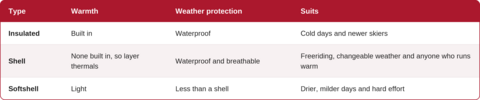
Insulated pants build the warmth into the fabric, so a light base layer underneath is all you need on a cold day. They're where we'd point anyone new to the mountains and anyone who feels the cold. Insulation is measured in grams, and around 40 to 80 g suits cold destinations. If you ski later in the season, look at the ventilation too, because spring sun and heavy insulation don't mix.
Shell pants have no insulation, but they're waterproof and breathable, and you set the warmth yourself with the base layer thermals underneath. A few weights are worth having, from light for mild days to something heavier when it's cold. They suit freeriders who want to roam the whole mountain and anyone who runs warm, and since you can add or drop a layer, they adapt when the weather changes.
Softshell pants are stretchy and breathable, usually with a brushed fleece backer. They fit close and move freely, but they give less weather protection than a shell, so they suit drier, milder days, warmer destinations and backcountry touring. They also work as an extra layer under shell pants.
Pants or Bibs?
Pants fasten at the waist like ordinary trousers and layer up easily. Bibs, also called salopettes, add a high front and back with shoulder straps, which keeps snow out at the waist after a fall. We'd suggest them for deep snow, for anyone still learning and falling a lot, and for anyone who wants the extra coverage and warmth. The trade-off is a little less flexibility at the waist and a bit more bulk.

Find The Right Fit
Slim pants sit close to the body and cut down on bulk, and the stretch in the fabric moves with you. Regular is the standard fit, often with a slightly tapered, boot-cut shape and space for layers and movement. Relaxed is the roomiest, with space to layer up on colder days and, often, more pockets for stashing things.
Men's and women's ranges both come in short, regular and long legs, and the hem should sit over the top of your boot without dragging under the sole or riding up your shin when you bend your knees. Cut and sizing change from brand to brand, so check the size chart for the pair you're looking at.
When you try pants on, take your ski boots and the base layers you'll wear underneath, then squat and lift a knee high. They shouldn't pull at the waist or hold you back, and the waistband should adjust so they stay put. If you need more size options, there's a plus size ski pants range.

How Waterproof Do They Need to Be?
Waterproofing is measured in millimetres, and ratings usually run from 5,000mm to 20,000mm. The higher the number, the more water the fabric holds back before it lets any through. At least 10,000mm is the industry standard for ski pants and covers normal resort skiing, and for wet days, long days, and plenty of falling, we'd look at 15,000 to 20,000mm.

Some pants are made from fabrics like GORE-TEX or The North Face's DryVent, which are waterproof but aren't rated this way. Breathability is measured in grams of moisture vapour per square metre per day, and a higher number means sweat escapes faster.
Which Seams Do You Need?

Which Features Are Worth Having?
Snow gaiter. A waterproof seal that fits around your ski boots to keep snow out. Some have hooks that clip to the boot buckles and an adjustable fit.
Cuff reinforcement. Ski pants are usually reinforced where the inside edge of the ski rubs the cuff, using tougher fabric to protect against ski edges.
Vents. Zips on the inner thigh let heat out. Technical backcountry pants often have full-length side zips for maximum ventilation, and the length and material vary by what the pants are built for.
Pockets. They range from baggy pants with cargo pockets to slim pants with pockets just big enough for a ski pass, so think about what you'll carry.

How Warm Do You Need to Be?
Experienced skiers who run warm can go for a shell and layer to suit the day. If you're new, or you feel the cold, insulated pants take the guesswork out of it. For backcountry days, a lightweight, breathable softshell or shell keeps your temperature steady on the climb and leaves room to add a layer when it drops.
Common Mistakes
- Choosing on waterproof rating alone and ignoring fit and leg length
- Picking heavy insulation for spring skiing or hard effort, then overheating
- Trying pants on without your boots or base layers
- Skipping seam taping when you expect wet snow
- Forgetting that sizing and cut change from brand to brand

Browse men's ski pants or women's ski pants at Snow+Rock, or kids' ski pants for the family. If you'd rather try pairs on, you can book an in-store appointment at your nearest store.
FAQs
Ski pants come as shell (waterproof, breathable, no insulation), insulated (warmth built in) and softshell (stretchy, breathable and best for milder, drier days). Choose by how warm you run and the weather you expect.
At least 10,000mm for resort skiing. For wet conditions, long days or a lot of falling, 15,000 to 20,000mm gives more protection.
Pants fasten at the waist and are easy to layer. Bibs have a high front and back with shoulder straps, which keeps snow out and adds warmth and coverage, so they suit deep snow and learners.
Slim fits close with the least bulk, regular has room for layers and movement, and relaxed is the roomiest. Whichever you pick, the hem should sit over your boot without dragging, and you should be able to squat and lift your knee freely.
They match the length of the leg to your inside leg, so the hem sits over your boot without dragging or riding up. Both men's and women's ranges include short, regular and long options.
A snow gaiter is a waterproof seal inside the pant leg that fits around your ski boot to keep snow and water out. Some clip to the boot buckles and adjust to fit.
You can, but snowboard pants tend to skip the cuff reinforcement that ski pants have for protection from ski edges, so the cuffs wear faster.
Related Articles

Let us know you agree to cookies
We use marketing, analytical and functional cookies as well as similar technologies to give you the best experience. Third parties, including social media platforms, often place tracking cookies on our site to show you personalised adverts outside of our website.
We store your cookie preferences for two years and you can edit your preferences via ‘manage cookies’ or through the cookie policy at the bottom of every page. For more information, please see our cookie policy.