
Snowboard Boot Buying Guide
Snowboard boots have to steer the board and cushion every landing at the same time, which is a harder balance than it sounds. So how do you choose the right pair? It starts with your riding style, then flex, fit and closure systems.
Soft Boots or Hard Boots?
Soft boots are what almost every snowboarder rides, built with a flexible outer construction that moves with your ankle rather than locking it in place. They cover everything from freestyle and park riding through to all-mountain and freeride use, with the exact feel tuned by the flex rating rather than the boot type itself.
Hard boots, closer in build to a ski boot with a rigid plastic shell, exist for alpine and carving-specific riding, where precise edge control at speed matters more than everyday ease of wear or flexibility. They're a genuine niche rather than an alternative many riders weigh up: harder to find in shops, rarely available to rent, and not a sensible starting point for anyone learning or riding freestyle.
Unless you already know you're headed toward alpine carving specifically, soft snowboard boots are the default, and the real decision is which flex and fit within that category suits you.
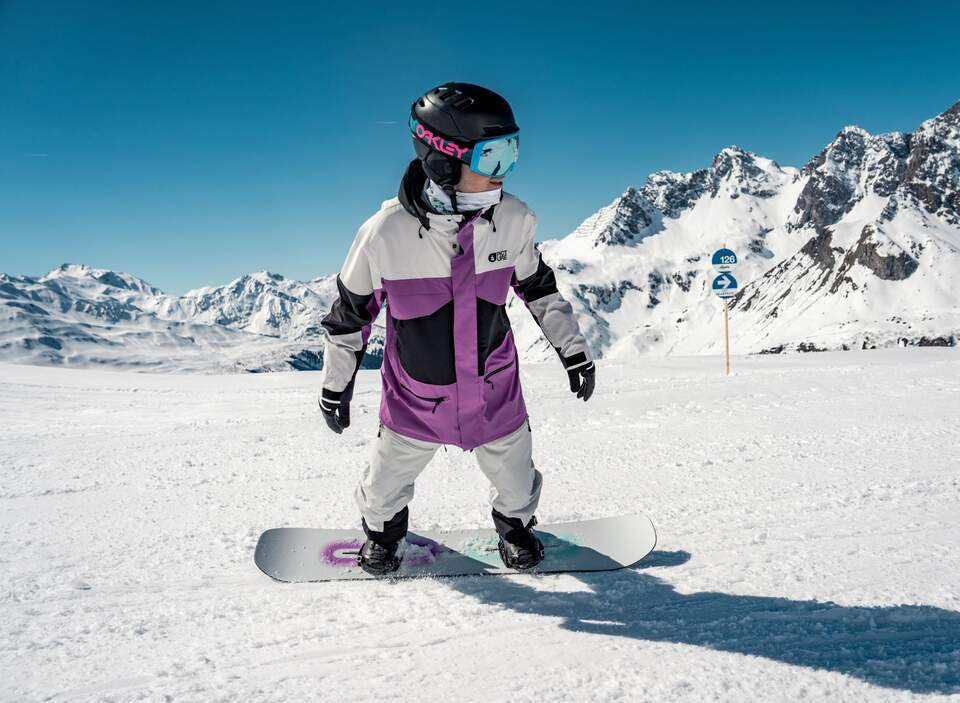
What Flex Suits Your Riding?
Flex runs on a scale from soft to stiff, and it shapes how the snowboard boot behaves more than almost any other spec.

Soft flex suits park and freestyle riding, jibbing and beginners generally. It's forgiving on landings and easier to control at low speed, though it gives up precision at higher speeds or on firm snow.

Medium flex covers general all-mountain riding, balancing enough support for varied terrain with enough give for ease over a full day.

Stiff flex suits freeride, carving and aggressive all-mountain riding, where firm ankle support and precise edge-to-edge response matter more than a forgiving landing.

Closure Systems
Traditional laces give the finest control over tension in different zones of the boot, tightened however tight or loose you want, zone by zone. The trade-off is time and effort: lacing up properly takes longer, and loose lace ends need tucking away from the bindings.
Quick-pull lacing (Boa and similar systems) tightens the whole snowboard boot, or separate zones on some models, with a twisting dial rather than laces. It's fast and repeatable between runs, though the cable can freeze or ice up in very cold conditions, and a damaged cable usually means a replacement part.
Straps and buckles tighten in sections similarly to laces but are faster to operate and hold up well to repeated use. Buckle hardware can fail over time, which is the main long-term trade-off against laces.
What Liner and Sole Should You Look For?
Liners sit between your foot and the boot's outer shell, and the quality of this layer affects warmth and fit as much as the shell does. Open-cell foam liners are lighter and cheaper but pack down faster with use. Closed-cell foam holds its shape and support for longer. Heat-mouldable (thermoform) liners shape to your foot specifically when heated, giving the closest individual fit, at a higher price than a standard liner.
Soles affect grip, shock absorption, and how the snowboard boot transfers power to the board. Rubber soles with a deep tread grip snow well and flex naturally for walking, at some cost to precision for freestyle tricks. Dense EVA soles add rigidity and shock absorption, trading away some of that natural walking flex. Carbon fibre soles sit at the stiff end, built for aggressive carving at speed, and suit a narrow group of riders rather than general use.
How Should a Snowboard Boot Actually Fit?
- Measure feet in the socks you'll actually ride in; a thinner sock exaggerates room and can lead to buying too small
- Measure later in the day, since feet swell slightly and morning measurements run small
- With the boot laced normally, toes should just touch the end
- Bend your knees into a riding stance; toes should come away from the end slightly, the standard fit test
- Heels should sit firmly in the heel cup with minimal lift when you flex forward
- New boots, especially stiffer ones or those with a thicker liner, need a short break-in period
- Wear them around the house or on a few short sessions first, letting the liner start shaping to your foot.
Start with soft boots unless you already know you're riding alpine specifically, match flex to riding style before ability, and pick a closure system based on how you actually like adjusting fit. Everything else- liner, sole, price- is worth fine-tuning once those three are settled. Browse the full range of snowboard boots at Snow+Rock to find a pair built for how you actually ride.
FAQs
Soft boots, unless you're specifically riding alpine or carving disciplines. Hard boots are a niche, harder-to-find category built around precise edge control at speed, not a general alternative riders typically need to weigh up.
A soft to medium flex, since it's more forgiving on landings and easier to control at the lower speeds beginners typically start at, whatever terrain they end up riding regularly.
Toes should just touch the end of the boot standing upright, then come away slightly once you bend your knees into a riding stance. Heels should stay seated in the heel cup with minimal lift.
Yes, particularly stiffer boots or ones with a thicker liner. A few short sessions, or wearing them around the house first, helps the liner start shaping to your foot.
Look for a liner that's visibly packed down, a shell that's gone soft and less responsive, or closure hardware that keeps failing, rather than counting days or seasons alone.
Related Articles


Let us know you agree to cookies
We use marketing, analytical and functional cookies as well as similar technologies to give you the best experience. Third parties, including social media platforms, often place tracking cookies on our site to show you personalised adverts outside of our website.
We store your cookie preferences for two years and you can edit your preferences via ‘manage cookies’ or through the cookie policy at the bottom of every page. For more information, please see our cookie policy.